
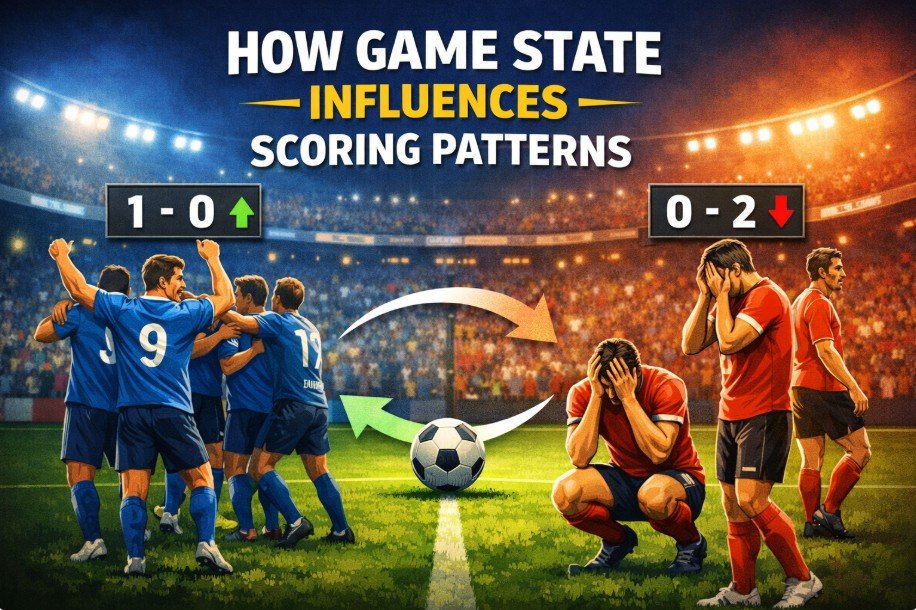
Football matches rarely unfold in a straight line. A goal, a red card, or even the clock ticking past a certain minute can completely change how teams behave. This evolving situation within a match is what analysts often call the game state. Simply put, game state refers to whether a team is winning, drawing, or losing at any given moment, and how that situation shapes decisions on the pitch.
Understanding game state helps explain why goals come in certain periods, why some matches suddenly open up, and why others slow down and become cautious. In this article, we’ll break down how different game states influence scoring patterns in a clear, practical way.
What Is Game State in Football?
Game state describes the current scoreline and context of the match. The most common game states are:
-
Drawing (0–0, 1–1, etc.)
-
One team leading by one goal
-
One team leading by two or more goals
Each of these situations creates different incentives. Teams don’t just play based on their style; they react to what the scoreboard tells them.
Why Game State Matters for Goals
Goals are not evenly distributed across matches. They are influenced by risk, urgency, fatigue, and psychology. Game state affects all of these factors at once.
When a team is behind, they are more likely to take risks. When a team is ahead, they may focus on control and protection. These choices directly affect how often chances are created and converted.
Scoring Patterns When the Match Is Level
Early Draws: Cautious Beginnings
At 0–0, especially in the early stages, many teams play carefully. Defenders stay compact, midfielders prioritize structure, and forwards avoid unnecessary risks. This is common in:
-
Big matches
-
Knockout games
-
First legs of two-legged ties
Because neither team wants to concede first, scoring rates tend to be lower in the opening minutes.
Late Draws: Rising Urgency
As the match progresses and remains level, behavior changes. In the final 20 minutes, teams often push harder to find a winner. This leads to:
-
Higher tempo
-
More shots from distance
-
Increased defensive mistakes
Late goals are common in drawn matches because both teams see value in pushing forward, especially if a draw doesn’t suit their league position.
What Happens After the First Goal?
The Immediate Impact
The first goal is often the most important moment in a match. It shifts the game state instantly and forces a response.
-
The scoring team gains confidence
-
The conceding team faces pressure to react
This is why many matches feel completely different after the opening goal.
Scoring Patterns When a Team Is Leading by One Goal
The Leading Team: Control Over Chaos
When a team goes 1–0 up, their approach often becomes more conservative. Common changes include:
-
Slower build-up play
-
Deeper defensive line
-
Fewer players committing forward
This doesn’t mean they stop attacking entirely, but their priority shifts toward protecting the lead.
The Trailing Team: Increased Risk
The team that is behind usually responds by:
-
Pressing higher
-
Making attacking substitutions
-
Leaving more space at the back
This creates a paradox. While the trailing team is more likely to score, they are also more vulnerable to conceding again.
Why Second Goals Matter So Much
Statistically, matches often open up after the first goal. Either the trailing team equalizes, or the leading team scores again on the counter. This is why many second goals arrive shortly after the first.
When the Lead Is Two Goals or More
Game Control and Reduced Urgency
A two-goal lead changes the psychology of the match. The leading team usually feels comfortable and focuses on game management rather than expansion.
This often results in:
-
Fewer total shots
-
Lower tempo
-
Longer spells of possession without penetration
The Trailing Team’s Dilemma
When a team is two goals down, belief can drop. Some teams continue attacking aggressively, while others lose structure and confidence. This inconsistency explains why:
-
Some matches end with late consolation goals
-
Others turn into heavy defeats
The response depends heavily on team mentality and coaching philosophy.
Time and Game State: A Critical Relationship
Early Leads vs. Late Leads
An early lead does not guarantee a low-scoring match. Teams that score early may:
-
Sit too deep
-
Invite pressure
-
Struggle to maintain focus for 90 minutes
Late leads, on the other hand, often reduce scoring chances because there is less time for tactical adjustments.
Why Late Goals Are So Common
In the final stages of matches, game state and fatigue collide. Defenders tire, concentration drops, and teams chasing goals commit numbers forward. This combination leads to:
-
Defensive errors
-
Set-piece goals
-
Counter-attacking chances
Late goals are not random; they are a direct result of game state pressure.
Home Advantage and Game State
Home teams tend to react more aggressively when trailing, driven by crowd support. Away teams leading a match often become even more defensive, aiming to protect a valuable result.
This dynamic explains why:
-
Home teams score many late equalizers
-
Away teams rely heavily on counter-attacks when ahead
How Game State Shapes Match Statistics
Game state influences almost every in-play statistic:
-
Shots increase for trailing teams
-
Possession often rises for leading teams without producing chances
-
Fouls and cards increase when pressure builds
Looking at raw numbers without considering game state can be misleading. Context always matters.
Conclusion.
Game state is one of the most important yet misunderstood aspects of football analysis. Matches are not static events; they evolve minute by minute based on the scoreline. Whether a team is winning, drawing, or losing shapes their decisions, risks, and ultimately, their scoring patterns.
By paying attention to game state, it becomes easier to understand why goals arrive when they do and why certain matches explode with action while others remain tight. Football isn’t just about quality—it’s about timing, pressure, and how teams respond when the game shifts.
Once you start watching matches through the lens of game state, the flow of football begins to make a lot more sense.