
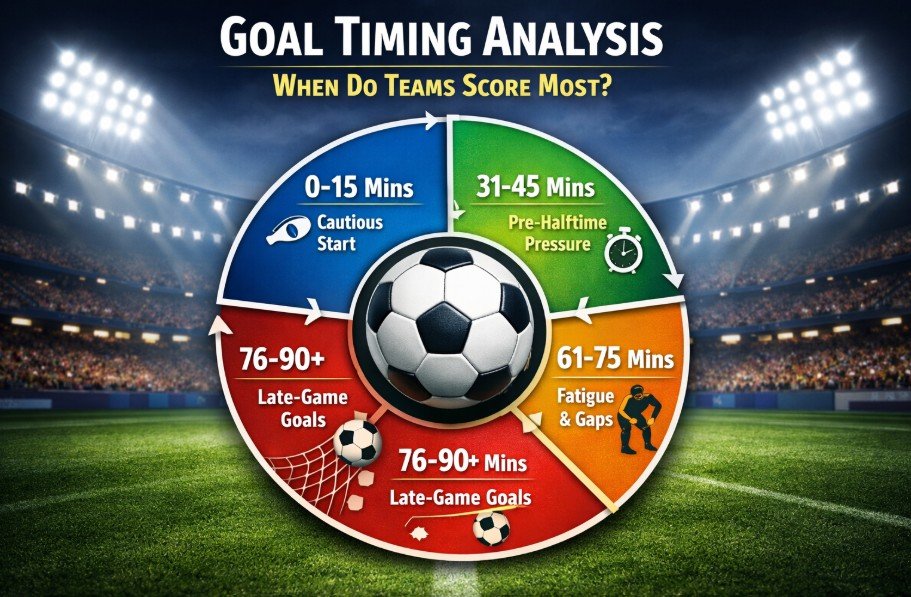
In football, goals change everything. A single strike can flip momentum, reshape tactics, and decide how the rest of the match is played. But goals don’t happen randomly. Over time, clear patterns have emerged about when teams are most likely to score.
Goal timing analysis looks at the minutes of a match where goals happen most often and why. Whether you’re a fan, analyst, or bettor, understanding these trends helps you read games better and avoid relying purely on instinct.
Let’s break it down in simple terms and explore when teams usually score – and what causes those moments.
Why Goal Timing Matters in Football
Every match has phases. Teams start cautiously, settle into rhythm, push before halftime, reset, and then chase results late on. These phases affect energy, focus, and risk-taking.
By studying goal timing, you learn:
-
When defenses lose concentration
-
When attacks become more aggressive
-
How fitness and substitutions affect games
-
Why late goals are so common
Instead of seeing goals as luck, timing shows the structure behind them.
First 15 Minutes: Feeling Each Other Out
The opening stage of a match is usually controlled and patient.
Most teams begin carefully, focusing on:
-
Shape and positioning
-
Safe passing
-
Avoiding early mistakes
That’s why goal numbers are often lower in the first 15 minutes compared to later periods. Defenders are fresh, instructions are clear, and players haven’t taken many risks yet.
However, some early goals do happen, usually caused by:
-
High pressing teams forcing errors
-
Poor concentration from defenders
-
Fast counter-attacks
Strong attacking sides sometimes start aggressively, but in general, the first phase is more about control than chaos.
Minutes 16–30: Settling Into Rhythm
Once the match opens up, things change.
By this point:
-
Teams understand the opponent’s shape
-
Midfields begin to stretch
-
Fullbacks push higher
This leads to more attacking movements and better chances. Players feel comfortable enough to try through balls, long shots, and overlapping runs.
Goals in this window often come from:
-
Defensive lines being pulled out of position
-
Better tempo in passing
-
Pressing traps forcing turnovers
It’s not yet frantic, but the match is no longer cautious.
Minutes 31-45: Pre-Halftime Pressure
This is one of the most productive goal periods in football.
As halftime approaches:
-
Teams push to go in ahead
-
Defenders become mentally tired
-
Concentration starts dropping
Coaches often tell players to “finish the half strong,” which leads to more forward runs and risk-taking.
Goals before halftime hurt more psychologically. A team that concedes in the 44th minute has no immediate chance to respond and goes into the dressing room frustrated.
Common causes of goals here include:
-
Late runs into the box
-
Set pieces from sustained pressure
-
Mistakes caused by fatigue
That’s why many analysts consider the final 15 minutes of the first half a danger zone for defenses.
Minutes 46-60: Tactical Adjustments
The second half usually starts with fresh instructions.
After halftime:
-
Managers adjust formations
-
Players fix mistakes from the first half
-
Tempo stabilizes again
This often leads to a brief reduction in chaos. Teams try to control the game before opening up fully.
Goals still happen, but usually from:
-
Tactical changes exposing space
-
Individual quality rather than pressure
-
Quick restarts catching defenses asleep
It’s less emotional than late-game football, but smart adjustments can unlock scoring chances.
Minutes 61–75: Fatigue Starts to Show
Now the physical battle begins.
By this stage:
-
Legs feel heavier
-
Pressing becomes inconsistent
-
Gaps appear between lines
Midfielders track back slower, and defenders struggle to hold high lines. This creates space for attackers to exploit.
Many goals here come from:
-
Counter-attacks
-
Overloaded wings
-
Late midfield arrivals
Substitutions also start to matter. Fresh attackers running at tired defenders often shift momentum quickly.
This period is where matches start tilting clearly toward one side.
Minutes 76-90+: The Late-Goal Zone
If there’s one phase famous for goals, it’s the final minutes.
Late goals happen for several reasons:
-
Teams chasing results push numbers forward
-
Defenders lose focus
-
Physical exhaustion kicks in
-
Goalkeepers face constant pressure
A losing team takes risks, leaving space behind. A winning team sometimes drops too deep, inviting attacks. Both situations increase goal probability.
Added time increases chances even more. Five extra minutes often feel like an entirely new mini-match.
Late goals usually come from:
-
Crosses into crowded boxes
-
Set pieces
-
Defensive errors under pressure
-
Rebounds and second balls
That’s why matches often look calm for long stretches, then explode in the final moments.
How Team Style Affects Goal Timing
Not all teams score at the same moments.
Some patterns stand out:
High-pressing teams
They score earlier because they force mistakes high up the pitch.
Possession-based teams
They score after sustained pressure, often mid-half once control is established.
Counter-attacking teams
They score more in open phases when opponents push forward, especially late in games.
Fitness-strong teams
They score late because they outlast opponents physically.
Understanding style helps explain why timing trends appear instead of just memorizing minutes.
The Role of Game State
Timing also depends on the scoreline.
-
When a team leads, they defend deeper.
-
When a team loses, they attack aggressively.
-
Draws create balanced but tense phases late on.
For example, a 0-0 game at 70 minutes often opens dramatically as both sides chase a breakthrough. A 2-0 game, on the other hand, might slow down unless the losing team takes big risks.
Goal timing isn’t fixed – it reacts to what’s happening in the match.
What Goal Timing Teaches Us
Goal timing analysis shows football is not random. It’s shaped by psychology, tactics, fitness, and risk.
In simple terms:
-
Early minutes are cautious
-
Mid-halves build rhythm
-
Pre-halftime is dangerous
-
Late stages are chaotic
Instead of guessing, watching these phases helps you read matches better. You start noticing when pressure is building, when defenders are tiring, and when goals feel inevitable.
Football isn’t just about who scores – it’s also about when they score.
And once you understand timing, every minute of the match starts to tell a clearer story.