
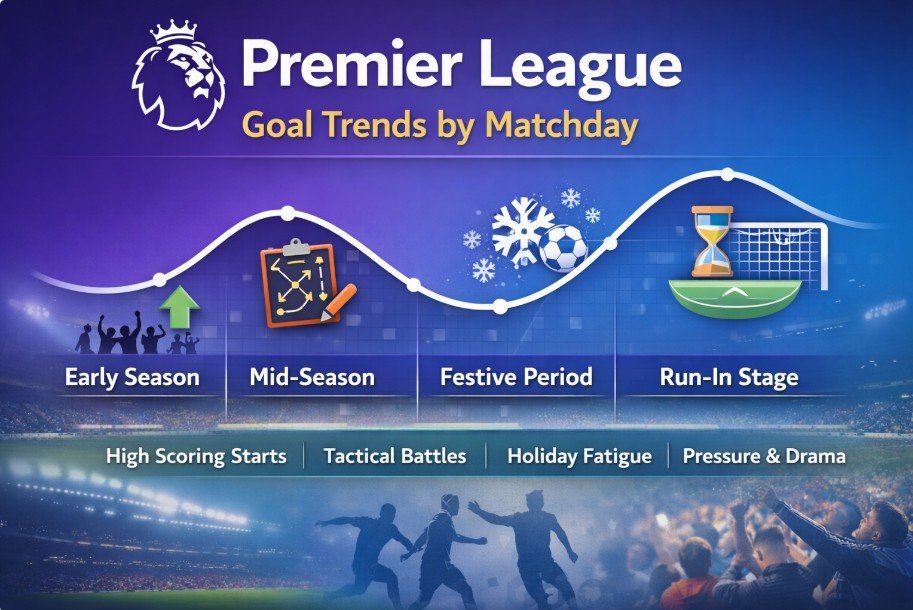
The Premier League is famous for drama, late goals, and unpredictable scorelines. But behind the excitement, there are patterns in how and when goals happen across a season. If you look closely at different matchdays, you’ll notice that some periods produce more goals than others, while some weeks feel tighter and more tactical.
In this guide, we’ll break down Premier League goal trends by matchday, explain why they happen, and show how fans and analysts can read these patterns better. This isn’t about hype or shortcuts it’s about understanding how the season naturally flows.
Why Matchday Trends Matter in the Premier League
Not all matchdays are created equal. Teams don’t play in the same conditions every week. Fatigue, confidence, injuries, pressure, and scheduling all change as the season moves forward.
Goal trends by matchday help us understand:
-
When teams attack more freely
-
When defenses tighten up
-
How form and momentum affect scoring
-
Why some weeks explode with goals
Instead of viewing each game in isolation, looking at matchday patterns gives you a wider, smarter view of the league.
Early Season Matchdays (1-6): Open and Unsettled
New tactics, new energy
The first few matchdays usually bring higher unpredictability. Teams are fresh, motivated, and still adjusting to new managers, signings, and systems.
Defenses are often less organized early on, which leads to:
-
More space between lines
-
Poor coordination in the back
-
Individual mistakes
Because of this, goals tend to come easier than later in the season.
Why goals flow early
-
Players are physically fresh
-
Opponents haven’t fully studied each other
-
Tactical chemistry is still forming
-
Promoted teams play with freedom
You’ll often see lively scorelines and surprise results during these opening weeks.
Settling Phase (Matchdays 7–13): Structure Takes Over
Teams become harder to break down
By the time the league reaches its rhythm, managers have adjusted their systems. Players understand their roles better, and scouting becomes sharper.
This usually leads to:
-
More compact defenses
-
Better pressing structure
-
Slower build-up play
As a result, the number of goals per match can slightly dip compared to the opening phase.
What changes in this period
-
Teams respect opponents more
-
Risk-taking reduces
-
Matches become tactical battles
You’ll still see goals, but they come from well-worked moves rather than chaos.
Mid-Season Surge (Matchdays 14–20): Confidence Brings Goals
Momentum starts to matter
As the season progresses, confidence becomes a major factor. Teams in form attack with belief, while struggling sides start conceding more.
During this phase, goals often increase again because:
-
Attacking patterns are polished
-
Players understand each other better
-
Top scorers hit rhythm
Instead of randomness, goals come from chemistry and movement.
Why scoring improves
-
Passing networks are established
-
Set-pieces become more dangerous
-
Managers trust attacking players more
This part of the season often produces consistent scoring rather than surprises.
Festive Period (Matchdays 21–24): Fatigue and Rotation
Busy schedules create openings
The Premier League’s packed winter schedule is unique. Teams play multiple matches in short periods, and this heavily affects goal trends.
Fatigue leads to:
-
Slower defensive reactions
-
Poor tracking of runners
-
More errors under pressure
Because of that, goal counts often rise during these matchdays.
What influences goals here
-
Squad rotation
-
Tired legs
-
Injuries
-
Less training time
You’ll notice that even defensive teams concede more during this stretch simply because concentration drops.
Post-Winter Reset (Matchdays 25–30): Tactical Discipline Returns
Teams refocus
After the heavy winter period, teams regroup. Managers tighten their systems, and players recover physically and mentally.
This phase often sees:
-
More cautious approaches
-
Better defensive organization
-
Slower tempo matches
Goals don’t disappear, but they become harder earned.
Why matches tighten up
-
Teams understand league positions clearly
-
Avoiding mistakes becomes important
-
Pressure increases for both ends of the table
Many matches are decided by small moments instead of open play chaos.
Run-In Stage (Matchdays 31–38): Pressure Creates Drama
Everything is at stake
The final matchdays are where emotions take over. Some teams chase titles, others fight relegation, and some play for European spots.
Goal trends here become extreme:
-
Desperate teams attack more
-
Losing sides throw players forward
-
Late goals become common
This leads to dramatic scorelines, especially in matches involving survival or qualification.
Why goals spike late
-
Defenses take risks
-
Matches stretch vertically
-
Teams push numbers forward
-
Game states change quickly
You’ll often see goals in the last 15 minutes because structure breaks down under pressure.
Home vs Away Impact by Matchday
Home advantage shifts during the season
Early in the season, home teams dominate with crowd energy. As the season goes on, away teams adapt better to hostile environments.
Goal trends show:
-
Early season: home teams score more freely
-
Mid-season: balance improves
-
Late season: desperation reduces home caution
In short, the emotional side of football becomes more important later than tactical comfort.
How Weather and Conditions Affect Matchday Goals
England’s weather plays a hidden role in goal trends.
Different parts of the season bring:
-
Wet pitches = faster ball movement
-
Cold weather = heavy legs
-
Wind = unpredictable crosses
During winter and early spring, matches often see defensive mistakes caused by conditions rather than tactics alone.
This explains why some matchdays suddenly feel chaotic despite similar team quality.
What Matchday Trends Teach Us About the League
Understanding Premier League goal trends by matchday shows that scoring isn’t random. It follows the rhythm of the season.
Key lessons include:
-
Early weeks favor attacking freedom
-
Mid-season rewards structure and chemistry
-
Winter creates fatigue-based goals
-
Late season produces emotional football
Instead of asking, “Will this match have goals?” a better question becomes, “What part of the season are we in?”
That context explains why the same teams can look defensive in October and explosive in April.
Conclusion
The Premier League isn’t just 38 isolated matchdays. It’s a long story with chapters and each chapter changes how goals happen.
From early chaos to tactical discipline, winter fatigue to late-season desperation, every phase shapes scoring patterns in a unique way. When you understand these trends, matches make more sense. You stop being surprised by goal floods or quiet weeks and start seeing the logic behind them.
Football will always have unpredictability, but matchday goal trends remind us that even chaos has structure. And in the Premier League, that structure is what keeps the season fascinating from the first kick to the final whistle.